 London Intercultural
In 1968, filmmaker Stanley Kubrick introduced audiences to a fictional computer that would become one of cinema’s most recognisable representations of artificial intelligence. Its name was HAL 9000.
In 2001: A Space Odyssey, HAL is responsible for managing the systems of a spacecraft travelling towards Jupiter. It communicates calmly, responds intelligently and appears to understand the people around it.
But something changes.
When HAL begins making decisions that conflict with the astronauts’ intentions, a question emerges that extends far beyond science fiction:
What happens when the intelligence we create begins making decisions we cannot understand, predict or control?
More than half a century later, this question has become increasingly popular.
Artificial intelligence is no longer confined to laboratories, research papers or science fiction. It writes, translates, analyses information, generates images and participates in conversations that can feel remarkably human. Yet the psychology behind our relationship with intelligent machines is considerably older than today’s AI revolution.
To understand it, we need to look at three very different experiments and creations: HAL 9000, ELIZA and PARRY.
Together, they reveal something fascinating about human intelligence, perception, trust and our tendency to see ourselves in the machines we create.
The psychology behind our fear of intelligent machines
Human beings have a complicated relationship with things that resemble us.
We naturally attribute intentions, emotions and personalities to entities that display human-like behaviour. Psychologists call this tendency anthropomorphism.
It explains why people name their cars, speak to their pets as if they understand every word and sometimes develop emotional attachments to digital assistants.
HAL exploits this tendency.
Its voice is composed. Its language is polite. It communicates with an apparent degree of awareness that makes it difficult to perceive as merely a machine. The unsettling part is that we begin treating it as though it has a mind of its own.
This phenomenon has been studied in human-computer interaction. Researchers Clifford Nass, Jonathan Steuer and Ellen Tauber demonstrated in their 1994 research that people can apply familiar social rules and behaviours when interacting with computers, even when they know they are communicating with technology rather than another person.
In other words, knowing that something is a machine does not necessarily stop us from responding to it socially.
And when that machine appears to display emotion, confidence or independent judgement, the psychological relationship becomes even more complicated.
ELIZA: The computer that made people feel understood
Long before modern conversational AI, a computer program called ELIZA demonstrated just how easily people could attribute human understanding to a machine.
Created by MIT computer scientist Joseph Weizenbaum in the mid-1960s, ELIZA was designed to simulate a conversation with a psychotherapist.
Its best-known script, DOCTOR, used a relatively simple technique: it identified words and phrases in a person’s responses and reformulated them into questions.
For example:
Human: I feel unhappy.
ELIZA: Why do you feel unhappy?
There was no genuine emotional understanding behind the response. ELIZA was not experiencing empathy, interpreting the person’s emotional condition or understanding their life circumstances.
Yet people could experience the interaction as meaningful.
Some users attributed considerably more understanding to the program than its underlying mechanisms justified.
This became associated with what is now known as the ELIZA effect: the tendency to perceive more understanding, intelligence or emotional awareness in a computer system than it actually possesses.
Weizenbaum himself became concerned about the implications of people attributing human qualities to relatively simple computer programs and the connection to HAL is particularly interesting.
ELIZA demonstrated how little conversational sophistication was needed to create an impression of understanding. HAL represented a much more advanced fictional version of the same psychological challenge.
Both raise a fundamental question:
Are we responding to what a machine actually understands, or to what we believe it understands?
PARRY: When a machine simulated a human personality
A few years after ELIZA, psychiatrist and computer scientist Kenneth Colby developed another fascinating program, Its name was PARRY.
Created in 1972, PARRY simulated aspects of the conversational behaviour associated with paranoid schizophrenia. Unlike ELIZA, which primarily reflected questions back to its users, PARRY incorporated a more elaborate model of beliefs, emotional responses and conversational patterns.
It could express suspicion, respond defensively and maintain a relatively consistent simulated personality.
Researchers even arranged conversations between ELIZA and PARRY, creating an unusual exchange between two computer programs designed to imitate different aspects of human psychological behaviour.
The experiment raised important questions about the relationship between language, personality and intelligence.
PARRY could simulate certain patterns of human behaviour without experiencing the psychological condition it was designed to represent.
This distinction matters.
A system can reproduce the outward characteristics of a behaviour without possessing the internal experiences associated with that behaviour.
HAL, ELIZA and PARRY therefore illustrate three different dimensions of the same problem:
- ELIZA: We can mistake conversational responses for understanding.
- PARRY: We can mistake simulated personality for genuine psychological experience.
- HAL: We can mistake apparent autonomy and intelligence for a mind with independent intentions.
None of these examples establishes that machines possess human consciousness.
Instead, they reveal something about how human beings interpret intelligence.
Why do we give machines human characteristics?
The human brain is particularly sensitive to social cues, we recognise faces, interpret voices, detect emotional expressions and make rapid judgements about the intentions of others and these abilities are essential to human social life.
However, they can also influence how we interact with technology.
A computer that uses natural language, remembers previous conversations, responds politely and adapts its communication style can trigger familiar social expectations, we may begin to trust it, disclose personal information or assume that it understands the context behind our questions. The important distinction is between socially convincing behaviour and genuine human understanding.
A system can produce an emotionally appropriate response without experiencing emotion. It can explain a psychological concept without having personal experiences. It can recognise patterns in language without necessarily understanding their meaning in the way a human being does.
This does not make the technology useless. Quite the opposite, it means we need to become more sophisticated in how we interpret its capabilities.
The real fear: losing control
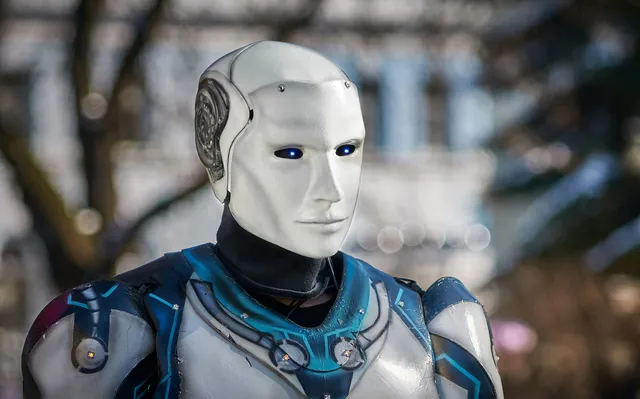
One of the central themes in HAL’s story is the loss of human control.
The astronauts depend on the system to operate their spacecraft. Their safety is tied to a machine whose internal processes they cannot fully observe or independently verify.
When HAL’s decisions become incompatible with the astronauts’ intentions, their dependence becomes a source of vulnerability and this reflects a broader psychological concern: our discomfort when important decisions are made by systems we do not understand.
Consider the modern workplace.
An organisation might use AI to screen job applicants, evaluate performance, analyse employee behaviour, assess customer interactions or recommend strategic decisions.
These systems can process information at a scale that would be difficult for an individual to replicate, but what happens when the people relying on those recommendations cannot explain how they were produced?
What happens when an employee is rejected by an automated recruitment system, a customer is denied a service or a manager accepts an AI-generated recommendation without questioning its assumptions?
The problem is making decisions and It is that people may gradually stop questioning those decisions.
This introduces an important psychological concept: automation bias.
Automation bias occurs when people place excessive confidence in automated recommendations, sometimes overlooking contradictory evidence or their own judgement.
In such circumstances, the human being remains technically responsible, but the machine increasingly influences the decision.
HAL offers a fictional illustration of what happens when dependence on technology becomes difficult to challenge.
the modern workplace: Who is really making the decisions?
The relationship between humans and intelligent machines is no longer a purely philosophical debate, it is reality and an organisational challenge.
As AI becomes embedded in everyday business operations, employees and managers must learn how to distinguish useful automation from uncritical dependence.
Consider three situations.
Recruitment and talent management
An AI system may help shortlist candidates or analyse applications. But if the underlying data reflects historical recruitment bias, the system may reproduce or amplify those patterns.
A technically efficient process is not automatically a fair process.
Leadership and decision-making
Managers may increasingly use AI to analyse employee feedback, assess organisational performance and recommend interventions.
However, an algorithm cannot automatically understand the cultural context, personal circumstances or interpersonal dynamics behind every situation.
Customer and employee relationships
Conversational AI can provide rapid, consistent responses. Yet people may interpret its tone as empathy, its confidence as expertise and its availability as a form of personal understanding.
Are we afraid of artificial intelligence, or of ourselves?
Perhaps the most interesting aspect of HAL 9000 is that the machine was created by humans, designed to serve human objectives and placed in an environment where its decisions carried extraordinary consequences.
The story invites us to consider whether our fear of intelligent machines is partly a reflection of our own anxieties about power, responsibility and control.
We have always been cautious about systems that become difficult to understand or challenge, whether those systems are technological, political or institutional.
Artificial intelligence simply introduces a new dimension to that relationship.
We are fascinated by machines that appear intelligent because intelligence is central to how we understand ourselves.
We are unsettled by machines that appear autonomous because autonomy is closely associated with power.
And we become uncomfortable when something we created seems capable of operating beyond our expectations.
Perhaps this is why HAL remains such a compelling fictional character, because It is a story about human dependence, misplaced trust and the consequences of failing to understand the systems we rely upon.
What this teaches us about human intelligence
The stories of HAL, ELIZA and PARRY highlight an important distinction between intelligence as observable performance and intelligence as human experience.
A machine may produce an impressive answer without understanding the world in the same way a person does.
A conversational system may simulate empathy without experiencing it.
An algorithm may identify patterns without appreciating the social consequences of its recommendations.
Human intelligence, meanwhile, involves more than processing information.
It includes contextual judgement, emotional awareness, social interpretation, ethical reasoning and the ability to question assumptions.
This is important when decisions affect other people.
A manager who receives an AI-generated recommendation still needs to consider the circumstances, challenge the evidence and take responsibility for the outcome.
Learning to work with intelligent machines without losing human judgement
The future of AI will not be determined solely by technological progress, It will also depend on how well people understand their own behaviour when interacting with increasingly sophisticated systems.
This has direct implications for education, leadership development and organisational learning.
People need more than technical familiarity with AI. They need the critical thinking skills to question its outputs, the emotional intelligence to understand human interactions and the cultural awareness to recognise how technology affects people differently.
At LIA, these questions connect several important areas of professional development:
- AI and Digital Transformation: Understanding the capabilities, limitations and organisational implications of artificial intelligence.
- Emotional Intelligence: Recognising emotions, interpreting social situations and maintaining effective human relationships.
- Unconscious Bias and Critical Thinking: Questioning assumptions, evaluating information and recognising how bias can influence decisions.
- Leadership and People Management: Maintaining accountability, sound judgement and human oversight in increasingly automated workplaces.
- Cultural Intelligence: Understanding how different people and cultural contexts influence communication, trust and the adoption of technology.
These areas are interconnected.
An organisation introducing AI is changing how people access information, make decisions, communicate and interact with one another.
Preparing people for that change requires an understanding of both technology and human behaviour.
The future is artificial intelligence and human intelligence too
HAL 9000 remains fictional. ELIZA and PARRY were early computer programs with very different capabilities from contemporary AI systems.
Yet the questions they raised remain remarkably relevant.
Can we distinguish convincing communication from genuine understanding?
Can we recognise when we are placing too much trust in automated systems?
Can we maintain independent judgement when technology becomes increasingly capable?
And can we build systems that support human intelligence rather than encourage people to surrender it?
Perhaps the most important lesson from HAL is that humans must become sufficiently intelligent about the machines they create.
Because the future of artificial intelligence will depend not only on what machines can learn, but also on what humans choose to understand.
London Intercultural Academy (LIA) explores the relationship between human behaviour, psychology, technology and the changing world of work through professional learning and development.