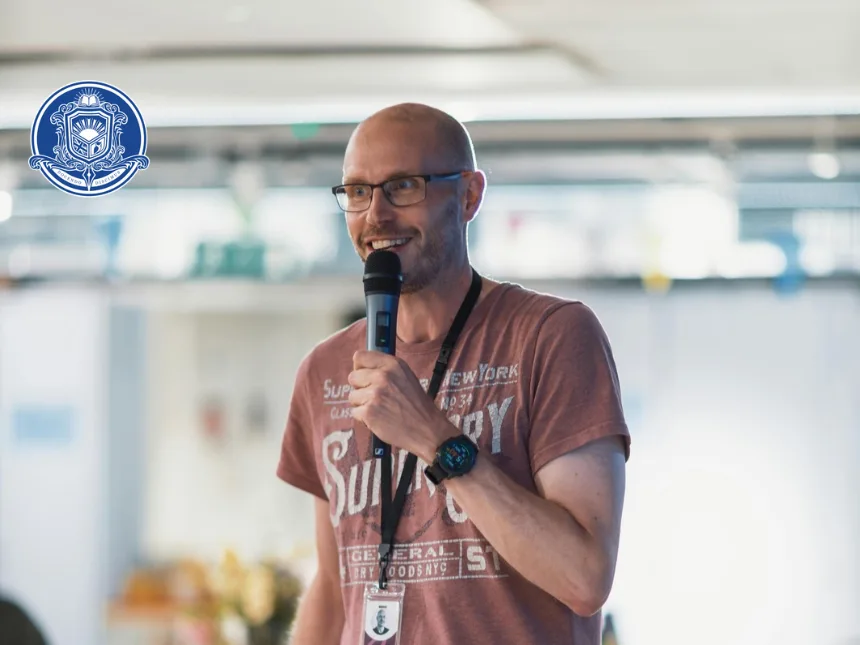
Intercultural training session at London Intercultural Academy (LIA) for workforce development.

Digital Detox Programme

£50.00

Practical workplace training delivered online and in person across the UK and EMEA

Training Overview

Break your scroll cycle. Learn the psychology of digital addiction and how to reset your brain for calm, clarity, and focus.

This is a science-backed course to help you understand the psychology behind digital addiction and reclaim control over your focus, habits, and peace of mind.

Transformations You will Notice 

  • You stop checking your phone out of reflex

  • You focus longer without feeling “mentally tired”

  • You actually rest during rest time

  • You feel more present, calm, and self-directed

  • You will understand how to control and reduce screen time

Training Highlights

  • What Is Digital Detox?
  • The Negative Impact Of Media Addiction
  • How Social Media Addiction Affects Your Psychological Health.
  • What Research Says About Social Media Addiction
  • Writings On The Wall: Signs You Need Digital Detox.
  • Benefits of Disconnecting To Reconnect
  • Reconnecting to your true self By Eliminating Media Pressure.
  • Vital Tips To Hack Your Digital Devices Use Addiction

Organisational Outcomes

  • Improved employee engagement and retention
  • Stronger workplace relationships
  • Better communication and collaboration
  • Greater resilience, wellbeing and personal effectiveness
  • Improved performance across teams and functions

Target Audience

  • This course is for anyone who feels mentally drained by social media or constant notifications, struggles with focus, rest, or creative flow, and wants to reset for a calm, deliberate, and present way of living.

Enquire about team access and delivery options

Real Conversation, Real Change

Participants don’t sit and listen, they discuss, challenge, and walk away transformed

Delivery Options

Choose how you would like to learn together. We will tailor the rest.

👤

Individuals

  • One-year access
  • Self-paced curriculum
  • Certificate on completion
  • Resource library
Request information
🏢

Organisations

  • Tailored programmes and custom delivery
  • Bespoke design & rollout
  • Multi-site and multi-language
  • Executive briefings
Request information

Featured coverage

Publication

Sunday Times

Sunday Times

"Surprisingly entertaining"

Training that participants remember, apply, and bring back into everyday work.

USE CASES

Why Organisations Choose our This Programme training

01 Supporting employee development and retention
02 Teams navigating change or growth
03 Communication challenges affecting performance
04 Improving engagement and collaboration

Delivery Options

3.5 hours

Half-Day Workshop

Awareness sessions, leadership away-days and programme introductions.

7 hours

Full-Day Intensive

Complete programme covering all modules.

2 days

Train-the-Trainer

Designed for internal L&D teams and HR Business Partners.

40 minutes

Online Self-paced

Video-based micro-learning that fits into busy schedules.

One training. Multiple delivery models.

In-person sessions

On-site facilitated training

Online Sessions

Live and self-paced

Hybrid

Enterprise-ready solutions

Global Training, Designed for your team

Training designed for international organisations operating across cultures, teams, and locations.

Available Across the UK & EMEA

Multilingual delivery

Consistency across locations

FREQUENTLY ASKED

Questions Organisations Raise

The research is substantial. Studies across organisational psychology and management demonstrate clear correlations between communication capability, psychological safety, and retention, productivity, and decision velocity. Our own evaluations consistently show measurable shifts: pre-post assessment scores, 90-day behaviour application metrics, and organisation-specific outcomes (turnover impact, engagement lift, team effectiveness indicators). We don't rely on participant satisfaction alone. We baseline specific metrics your organisation identifies as important, measure against those baselines, and report candidly on what changed.

Substantively, in three respects. First, discovery precedes design. We conduct structured conversations with stakeholders—understanding your organisational culture, strategic objectives, specific challenges, and previous training experience—before any curriculum is developed. Second, content and methodology are tailored to your context, sector, and challenges rather than delivered uniformly across clients. Third, we integrate intercultural and behavioural research frameworks (LIC-Prism™ and CCARES™) specifically designed to address complex workplace dynamics, not surface-level awareness. The rigour is visible in how the programme sits within your organisation's broader strategy, not alongside it.

Behaviour change is most durable when reinforced by peer accountability and structured practice. In team-based delivery, this is built in—individuals are more likely to sustain new approaches when colleagues are applying them simultaneously. Operationally, we embed action planning into the programme itself, with specific, situational commitments. Post-delivery, optional coaching supports the critical 90-day window when new behaviours are most fragile and most likely to be abandoned under operational pressure. For larger programmes, we recommend periodic reinforcement sessions. The evidence is clear: isolated training without follow-through reverts; programmes with structured adoption support maintain gains.

Resistance is rational and should be addressed directly. We anchor the work in your organisation's stated business objectives—improved retention, enhanced team performance, reduced friction, stronger recruitment outcomes—rather than abstract principles. In the room, we establish psychological safety first. Participants need confidence that questions won't be penalised and that the space isn't ideological. We present frameworks as tools for effectiveness, not mandates for thought. The organisations we've worked with consistently report that sceptics shift not through persuasion, but through genuine experience of what happens when people listen to each other differently. That experience is more powerful than argument.

We recommend a tiered approach. Immediate measures: pre-post diagnostic scores and participant feedback on relevance and application clarity. Medium-term (30-90 days): observed behaviour application, team feedback on shifts in dynamics, engagement or psychological safety survey lift. Longer-term: retention metrics, tenure of new hires, internal mobility patterns, and qualitative data from exit interviews and stay interviews. We help your organisation identify which metrics align with your primary business drivers—some prioritise retention, others team velocity, others hiring quality. Baseline these before the programme begins; measure against them afterwards. The specificity of measurement increases accountability on both sides.

Substantially. Financial services organisations operate under different regulatory and reputational constraints than healthcare, which differs from technology or manufacturing. Cultural maturity varies—some organisations have deep DEI infrastructure; others are earlier in that journey. Risk tolerance, decision-making speed, communication norms—all differ. Rather than a universal approach, we conduct a cultural audit during discovery, identify where the organisation is positioned, and design accordingly. The frameworks remain rigorous and evidence-based. The applications, examples, and emphasis shift to match your context. That's why an organisation can recognise itself in the programme rather than feeling it was designed elsewhere and parachuted in.

Cohort composition matters more than size. Groups of 12-20 allow sufficient diversity of perspective and experience for meaningful dialogue without losing psychological safety. Mixed organisational levels can be productive if power dynamics are acknowledged and managed. However, the most robust outcomes emerge from intact teams—groups that work together daily. Peer accountability operates most effectively within existing relationships. For larger organisations, we often recommend layered delivery: core team sessions, then cascading to broader populations, with reinforcement at each level. Single-session, all-staff training typically produces lower adoption than targeted, repetitive work with specific teams. We advise based on your structure and objectives, not on standardised approaches.

Integration is critical. If this training sits in isolation, its impact diminishes. We work with your HR, L&D, and organisational development teams to map how the programme connects to existing initiatives—succession planning, talent development, culture change programmes, leadership frameworks. Often, we position this training as a foundational capability layer supporting broader organisational strategy. We align with your development calendars, complement rather than compete with other initiatives, and ensure messaging from leadership reinforces rather than contradicts what the training introduces. Organisations that treat this as a discrete event see modest results. Those that integrate it into their broader people strategy see substantial, sustained change.

The core frameworks—our research-grounded models for understanding behaviour and communication—remain constant. They're the bedrock of the approach. What customises substantially is application: case studies, scenarios, discussion prompts, examples, emphasis areas. If your organisation has a specific challenge—say, cross-cultural collaboration or managing virtual teams—we embed that. If you need multi-site or multi-language delivery, we design for that. If you require integration with your own toolkits or language, we accommodate it. What we don't customise is intellectual integrity. If a requested modification would compromise the rigour or evidence-basis of the work, we'll advise against it. We're here to deliver something that works, not something that simply aligns with every stakeholder preference.

Our facilitators hold grounding in organisational psychology, intercultural communication, and behavioural change methodologies. Most hold postgraduate qualifications in relevant disciplines. Beyond credentials, they bring substantial corporate experience—they've worked inside organisations, understood operational constraints, managed teams through change. They're trained specifically in our frameworks and methodology, and undergo ongoing evaluation and development. This matters because facilitation in this space requires both intellectual credibility and practical credibility. Participants need to trust that the person leading the room has worked inside real organisations, understands real constraints, and isn't speaking in theory alone.

We begin with discovery. Your executive sponsor, HR partner, and we have structured conversations to understand objectives, constraints, and context. We then develop a proposal outlining scope, methodology, timeline, investment, and expected outcomes. Upon agreement, we move into design—developing the tailored curriculum, identifying cohorts, preparing logistics. Delivery is our responsibility; adoption and integration is shared. Your role includes: securing leadership visibility and support, communicating programme importance to participants, providing access to data we need for evaluation, supporting post-delivery reinforcement. Our role includes: rigorous design and delivery, supporting adoption, measuring outcomes, being accountable for effectiveness. It's a partnership. The programme only succeeds if both sides are committed to the outcome.

How participants describe the experience.

01 / 14

Programme Enquiry Form

×

Get full programme details

Receive the full breakdown of this course.

Want to receive push notifications for all major on-site activities?

0
    Enrolment Form
    Your cart is emptyReturn to Courses