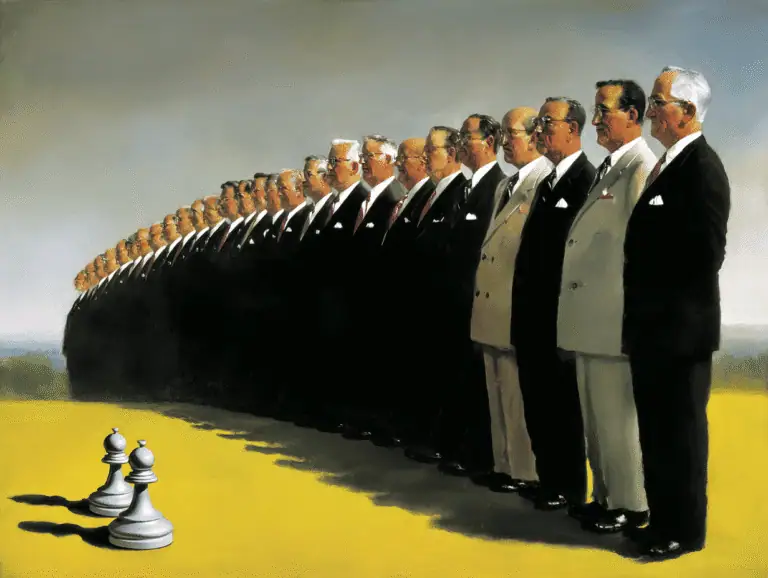
Unconscious bias (often called implicit bias) – refers to the automatic judgements we make about people without consciously intending to. It sits in the background of how we process information, shaped by experience, culture, and repeated exposure rather than deliberate belief. In practical terms, it shows up in small, everyday decisions. For example, you might: gravitate towards candidates who feel “familiar” in a hiring process, interpret the same behaviour differently depending on who’s doing it, make quick judgements based on accent, name, or appearance. Most people have these biases; having them isn’t unusual. What tends to matter more is whether they go unexamined.
In a professional context, the topic is often approached with a bit of restraint. Rather than accusing individuals of prejudice, organisations tend to frame it as something structural and worth managing, much like any other source of decision error. You will often see it addressed through: structured interviews (to reduce gut-feel hiring), diverse shortlists, anonymised CVs, training that focuses on awareness rather than blame. Something along the lines of: “It might be worth checking whether we are leaning a bit on instinct here, there’s a fair bit written about how unconscious bias can creep into decisions like this.” It acknowledges the issue without making it personal, which tends to keep people receptive rather than defensive.
Why does Unconscious Bias exist
At a basic level, unconscious bias exists because the brain is built to make quick judgements with limited information. It’s less a flaw than a side effect of how we process the world efficiently.
A few underlying reasons tend to come up:
1. We are constantly taking in more information than we can fully analyse. So the brain creates patterns and shortcuts, “people like this tend to be like that”, to speed things up. Most of the time that’s useful. Occasionally, it’s misleading.
2. Earlier humans benefited from quickly distinguishing between what felt familiar and what didn’t. Familiar often meant safe; unfamiliar could mean risk. That instinct hasn’t disappeared, even though the modern workplace isn’t exactly a prehistoric landscape.
3. Over time, we absorb patterns from media, upbringing, education, and social circles. If certain groups are repeatedly shown in particular roles or narratives, those associations can become automatic, even if we consciously disagree with them.
4. People tend to favour what feels recognisable, similar backgrounds, communication styles, even hobbies. In business settings, this can quietly shape decisions like hiring or partnerships under the guise of “fit”.
How Did We Discover Unconscious Bias?
Unconscious bias wasn’t discovered in one neat moment, it emerged gradually, as psychologists started noticing that what people said they believed didn’t always match how they actually behaved.
A few strands came together:
1. Early social psychology (mid-20th century)
Researchers began running experiments where participants expressed fairly neutral or fair-minded views, but then behaved differently in real situations. One well-known example is Richard LaPiere’s 1930s study: hotels said they wouldn’t accept certain guests, yet in practice often did. It hinted that stated attitudes weren’t the full story.
2. Later work by psychologists like Daniel Kahneman and Amos Tversky showed that humans rely heavily on mental shortcuts (heuristics). These shortcuts help, but they also introduce systematic errors, biases we are not aware of.
3. The “implicit” breakthrough (1990s onwards)
The idea of unconscious or implicit bias became more concrete with tools like the Implicit Association Test (IAT), developed by Anthony Greenwald and colleagues.
The test measures how quickly people associate concepts (e.g. certain groups with positive or negative words). The speed differences suggest underlying associations people may not consciously endorse.
4. Real-world patterns
Alongside lab work, researchers looked at outcomes:
- identical CVs getting different responses depending on the name
- differences in how behaviour is judged across groups
- patterns in hiring, promotion, and even medical treatment
When the same patterns showed up repeatedly, it became harder to explain them purely as conscious choice.
How is unconscious bias relevant in the workplace?
In the workplace, unconscious bias tends not to appear as anything overt. It’s usually quieter than that, showing up in small decisions that feel reasonable in isolation but form patterns over time.
A few areas where it commonly plays out:
Hiring and recruitment
People often talk about “fit” or “gut feel”. That can, without much intention, favour candidates who sound, look, or behave in familiar ways, similar education, accents, or career paths.
There’s well-cited evidence of identical CVs getting different responses depending on the name, which suggests decisions aren’t always as neutral as they seem.
Performance and promotion
The same behaviour can be read differently depending on who’s doing it. One person is “confident”, another “a bit much”. Over time, that affects who’s seen as leadership material.
Day-to-day interactions
Who gets interrupted, whose ideas are picked up, who is asked to take notes or organise things, these are small signals, but they accumulate. They shape visibility and perceived contribution.
Client and sales settings
There can be assumptions about who a client will “relate to”, or which colleague should lead a pitch. It’s often framed as commercial instinct, but it can narrow opportunities unnecessarily.
what are companies doing about it?
Most companies are not trying to “eliminate bias” outright, that tends to sound a bit grand. The more credible approach is to accept it’s there and put some guardrails around decisions where it matters.
What that looks like in practice is fairly measured:
1. Making hiring a bit less instinct-led
Rather than relying on informal interviews and “chemistry”, many firms:
- use structured interviews (same questions, same scoring)
- define criteria in advance
- sometimes anonymise CVs at the first stage
It doesn’t remove judgement, but it reduces how much weight is put on first impressions.
2. Tightening promotion and performance processes
You’ll see more calibration discussions, managers comparing notes across teams to check for consistency.
Some organisations also ask for written justification against clear criteria, which slows down snap judgements just enough to make them more considered.
3. Training – but with mixed expectations
Unconscious bias training is still common, though there’s a growing recognition it’s not a cure-all. At its best, it raises awareness; on its own, it rarely changes behaviour long term.
So companies tend to pair it with process changes rather than relying on it.
4. Using data quietly in the background
HR teams increasingly look at patterns:
- who gets hired, promoted, or leaves
- whether certain groups cluster at particular levels
It’s usually handled discreetly, but it helps spot trends that wouldn’t be obvious day to day.
5. Small behavioural nudges
Things like:
- diverse hiring panels
- rotating who leads meetings or takes notes
- making sure shortlists aren’t drawn from the same networks
Nothing dramatic, just enough to interrupt habitual patterns.
In the UK, the tone around this is typically quite pragmatic. Companies that handle it well don’t make a great show of it; they frame it as improving fairness and decision quality, not correcting people’s character.
If you were discussing this internally or with a client, it often lands better to keep it understated, for example:
“We’re not trying to over-engineer things, just making sure our processes don’t lean too heavily on instinct where it might skew outcomes.”
That tends to sound proportionate, which is usually what people are looking for.